6 Politekhnichna Street
Building 5, floor 8, room 801

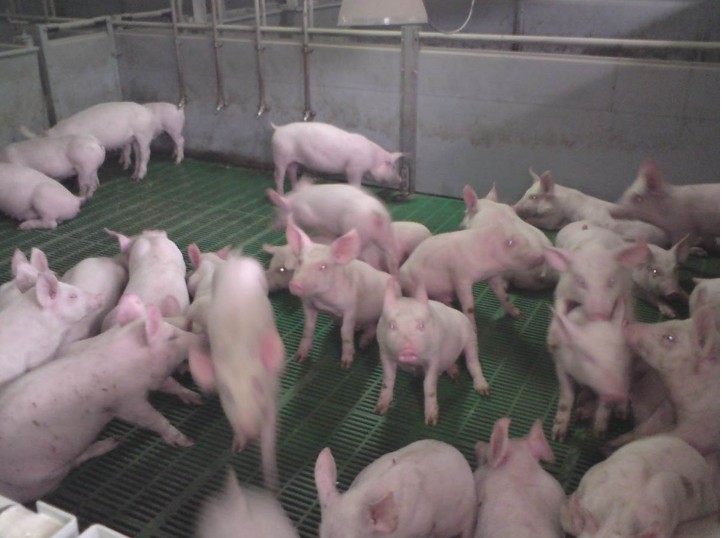
Climate is a key factor in animal welfare and productivity on an intensive pig farm. The control systems described here coordinate supply and extract ventilation with heating or cooling to maintain the required indoor conditions through seasonal changes. Fan groups can be staged, while one or more fans may be driven by a variable-frequency drive to avoid abrupt changes in airflow. Separate performance curves can be set for supply and extract ventilation; supply airflow is adjusted through inlet dampers and extract airflow through the selected fan groups.
Control algorithms were developed in consultation with livestock specialists. Panels support automatic, manual and maximum-output modes; display operating modes, sensor readings, equipment status and setpoints; record and signal alarms; diagnose sensor or equipment faults; protect settings from unauthorised access; and can connect to a farm-wide supervisory system.
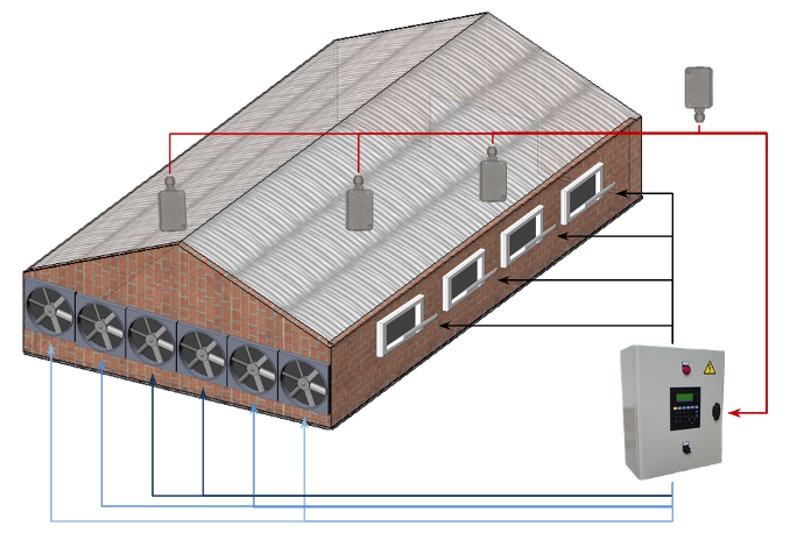
For a single large pig house, the panel controls the room temperature through supply and extract ventilation, one smoothly controlled fan section and up to six switched fan sections. It can change to tunnel ventilation at a configured temperature and modulate the inlet dampers. Supply and extract parameters can operate together or independently.
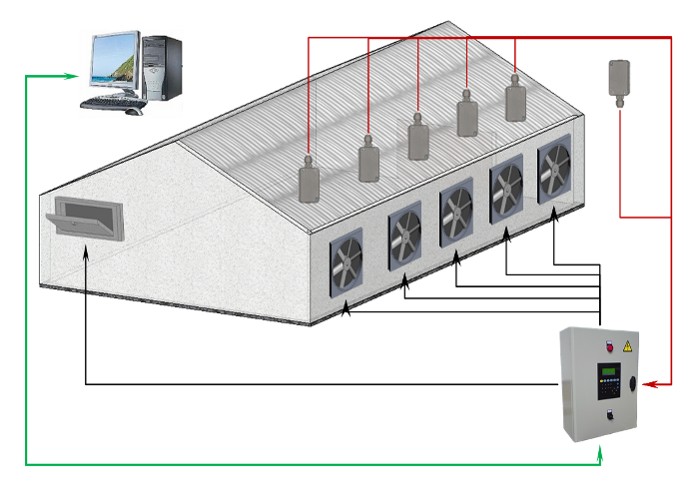
Where a building is divided into pens, each area can have independent temperature sensing and ventilation control. The described configuration supports up to seven single-phase fans and seven room-temperature sensors, displays outdoor temperature, and allows separate setpoints and ventilation limits for each room. Heating equipment can be coordinated with ventilation.
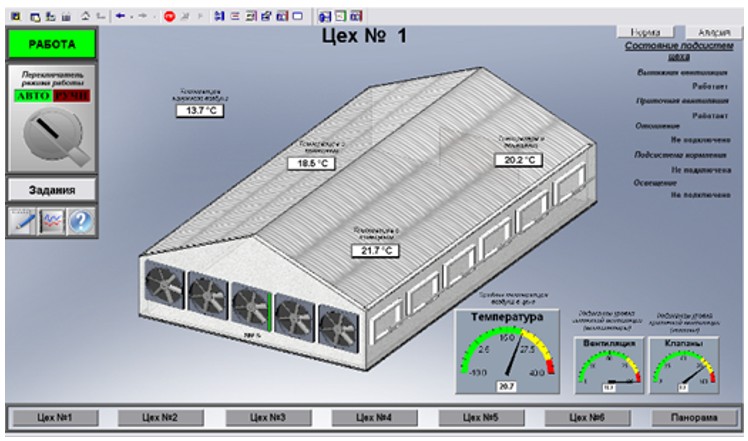
A dispatcher application connects the farm buildings through controllers using the industrial Modbus RTU protocol. It collects and displays indoor and outdoor process data, shows equipment status, archives readings, allows central changes to setpoints, records alarms and operator actions, and provides context-sensitive prompts. Mimic diagrams use colour and sound to make system states easier to identify; trend charts show temperature, humidity, fan output and inlet-damper position. The software also supports schedules, reports, access controls and integration with other farm systems, including feed-distribution and lighting controls.