6 Politekhnichna Street
Building 5, floor 8, room 801

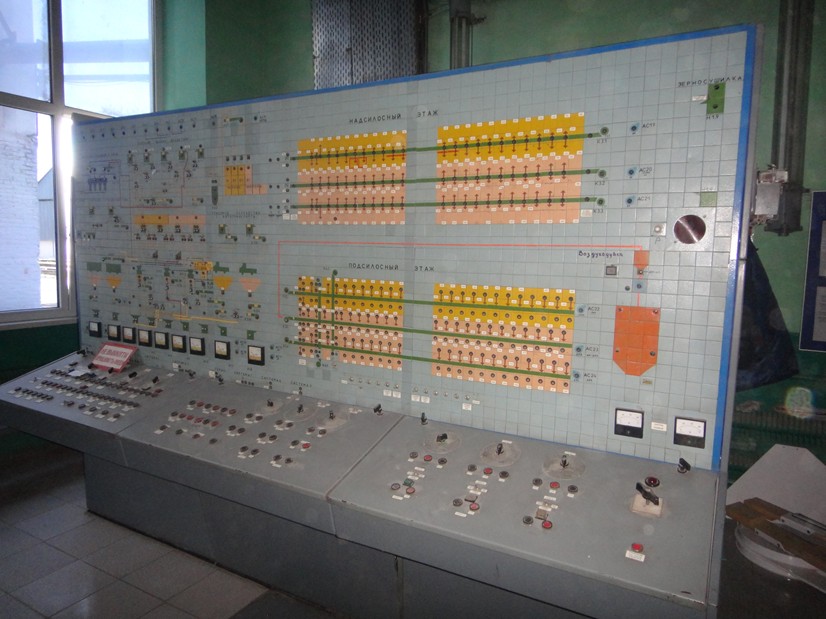
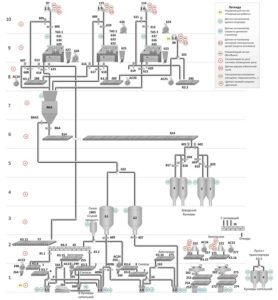
A grain elevator is a highly mechanised complex of storage silos, conveyors and processing equipment. Its machinery must be assembled into routes that move grain from a source to a selected destination. The modern automatic control system replaced a legacy operator panel with industrial controllers and computer-based supervision.
A separate pneumatic route transfers grain-cleaning husks to nearby boiler hoppers for use as fuel. A compressor moves the waste through a pipeline; hopper fill-level signals are included in the control system.
The system has two levels. Industrial controllers and field devices carry out local control. Two control cabinets are linked by Industrial Ethernet to reduce cable runs: the main cabinet on the first floor serves equipment on floors one to five and communicates with equipment on floors six to ten through a second cabinet on the ninth floor. A touchscreen is provided at the first-floor cabinet. Because the tower is unheated, the cabinets use equipment rated for −20 to +50 °C and include thermostatic heaters.
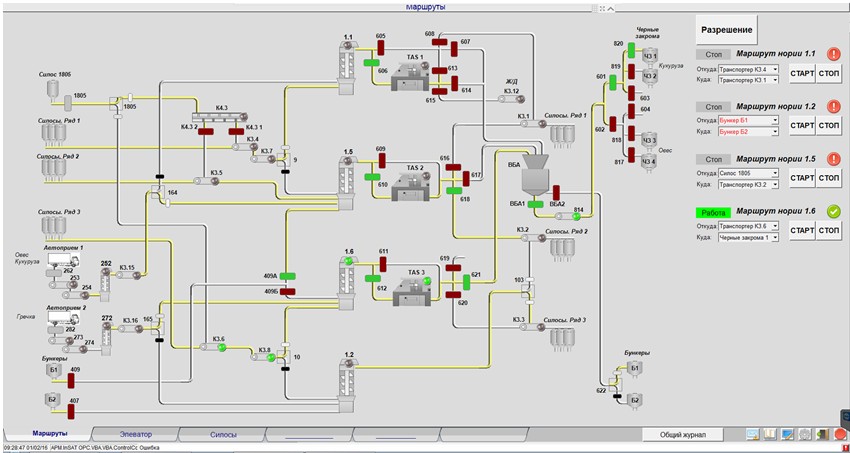
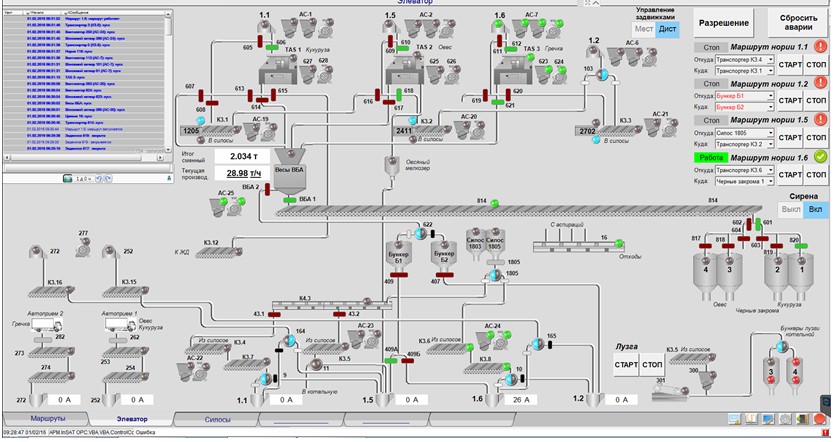
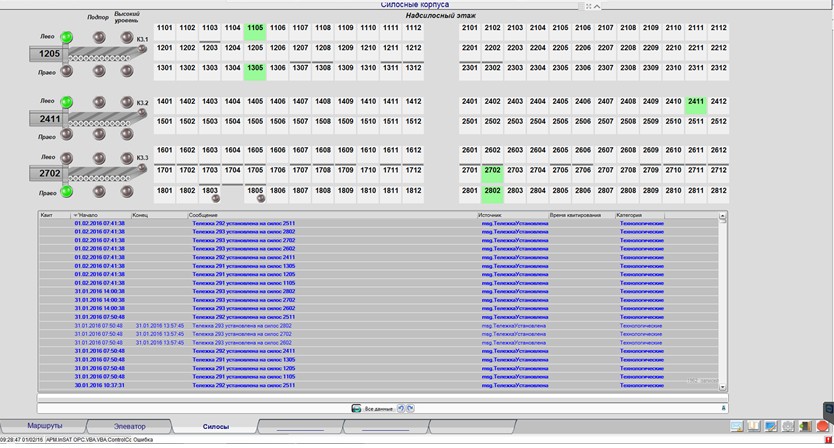
At the supervisory level, dedicated software on the dispatcher’s computer provides central monitoring, archiving and control. The operator interface is organised as interactive mimic diagrams for logical groups and process units. The route view shows sources, destinations, intermediate machinery, conveyors and flow-direction gates; the elevator view shows the process sequence and equipment status; and the silo view shows the overhead conveyor, discharge-carriage positions and recorded movements. The interface also presents current and archived data, controls, reports and event history, supporting process analysis and integration with enterprise systems.
The system was intended to improve route operation and product tracking, reliability and fault diagnosis, reduce downtime through early fault localisation and orderly stopping, and give operators a clear view of the complex.